Aarahau, East Are’Are, Malaita Province | 27–28 October 2026
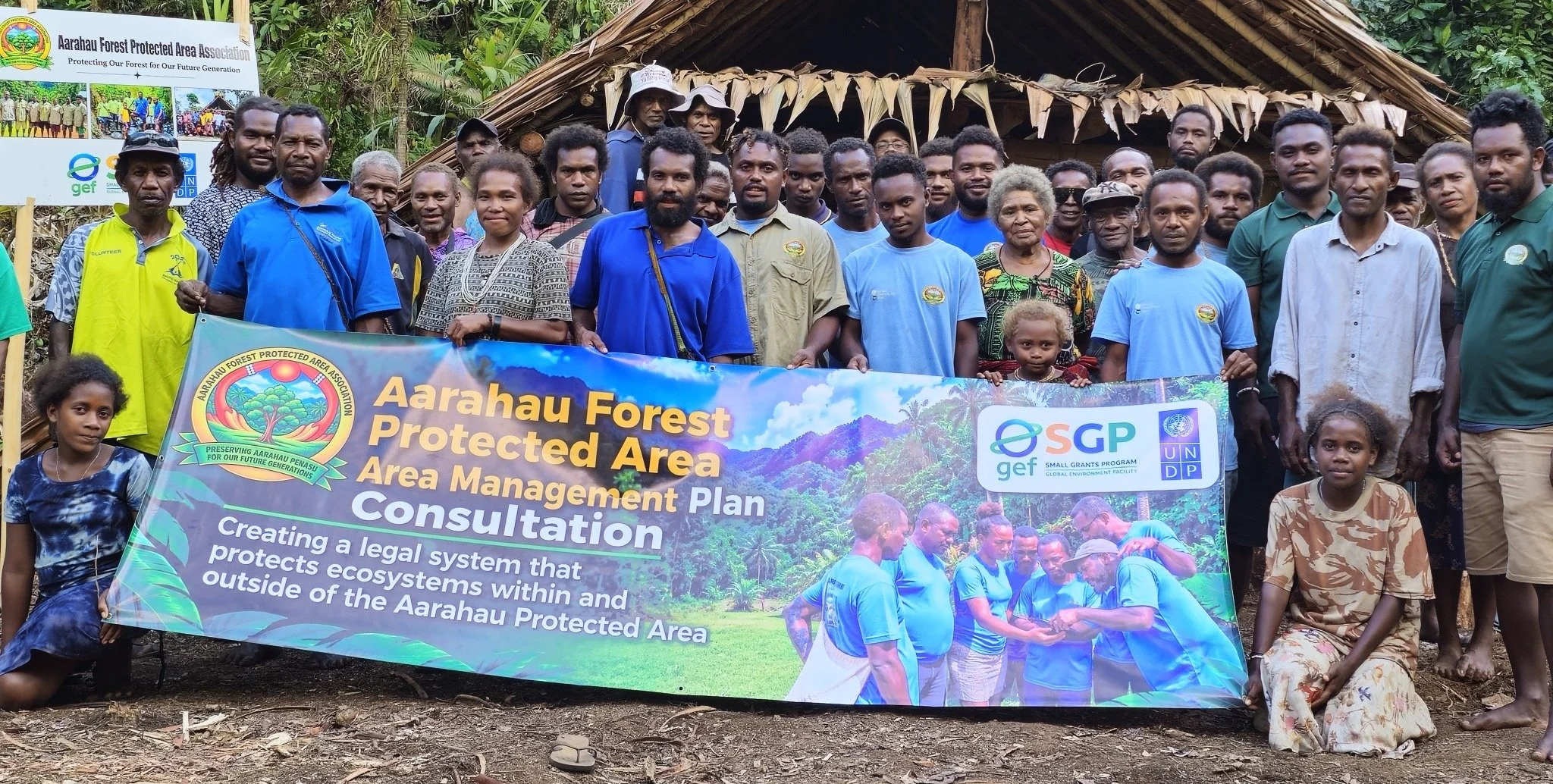
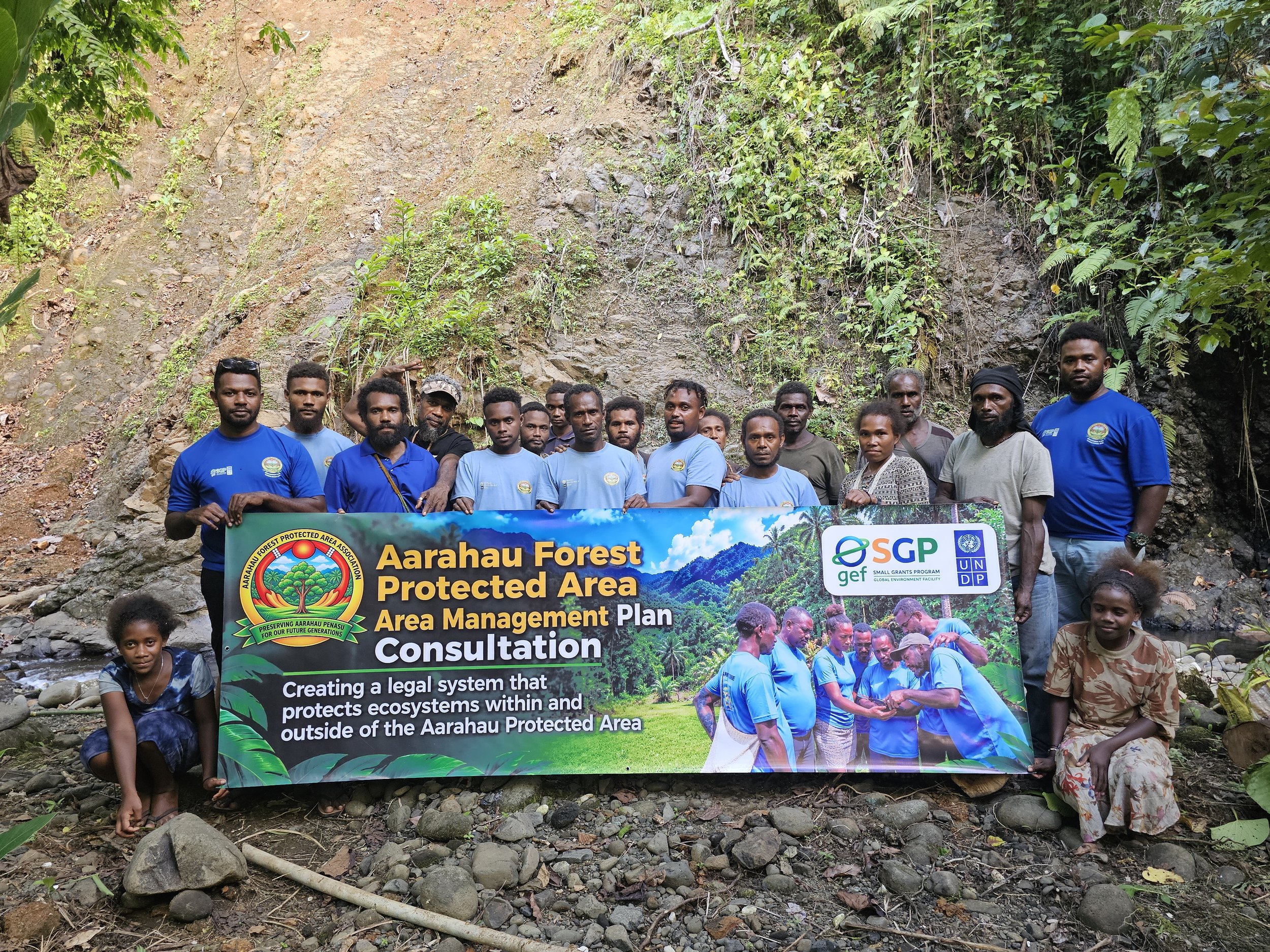
Aarahau tribal chiefs, Rangers, and tribal members standing for a group photo during the Management Plan consultation on 27 October 2026 at the newly established Aarahau Eco-Village.
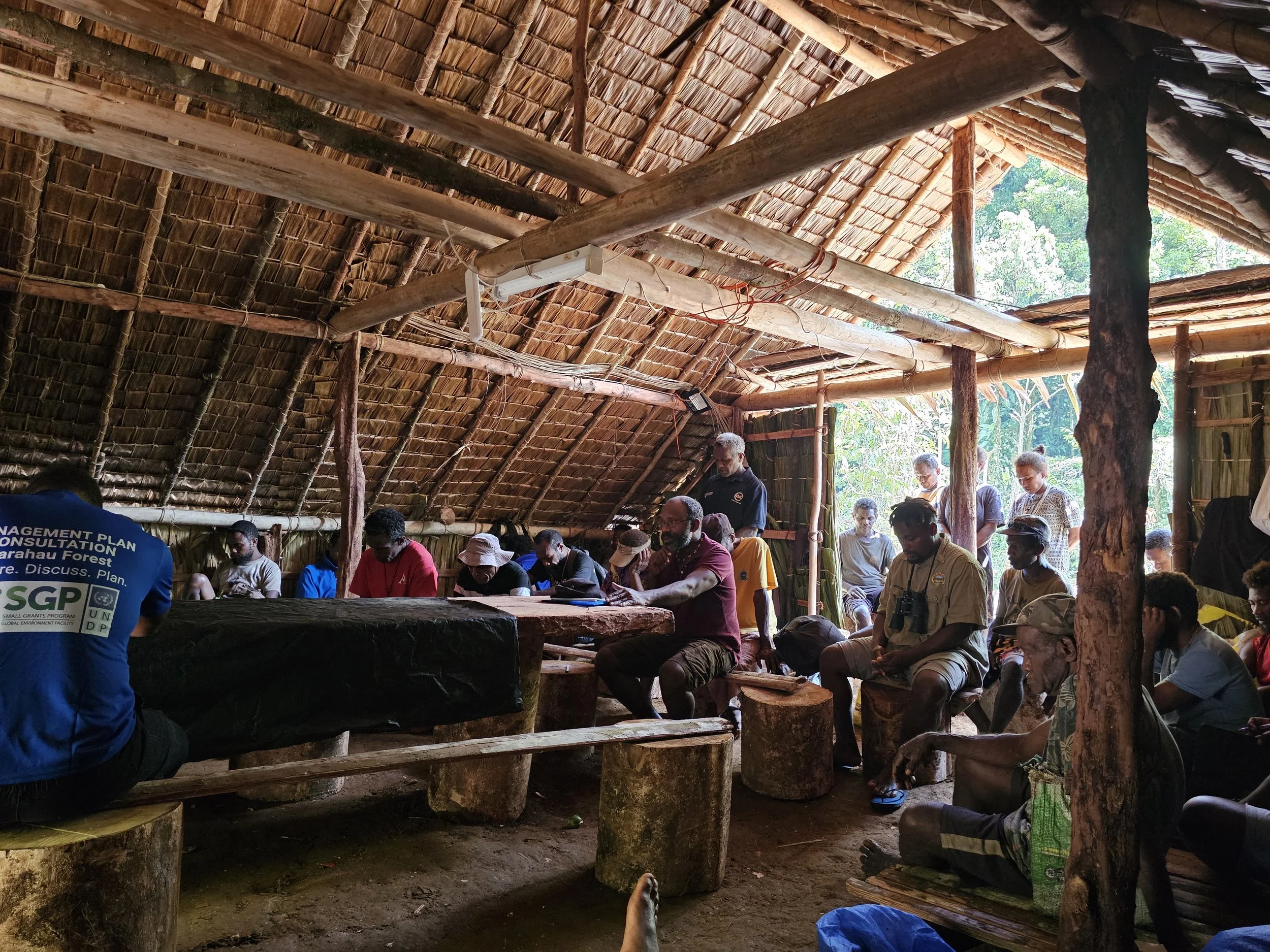
The Aarahau Forest Protected Area Association (AFPAA) has successfully completed a two-day Management Plan Consultation at the newly established Aarahau Eco-Village in the Central Highland of East Are’Are, Ward 19, Malaita Province.
Held from 27 to 28 October 2026, the consultation marks an important milestone in the ongoing process of establishing the Aarahau Forest Protected Area. It is also the first activity implemented under the Global Environment Facility Small Grants Programme (GEF SGP), facilitated by the United Nations Development Programme (UNDP) Solomon Islands.
The consultation forms a critical foundation for developing a Management Plan that will guide the sustainable use, protection and governance of natural resources within the proposed Protected Area.
Facilitated by AFPAA Legal Officer, Mr Michael To’otalau, with support from AFPAA staff and volunteers, the consultation brought together 31 participants, including chiefs, tribal leaders, church leaders, women, youth representatives and community members from six surrounding communities: Taripiri, Orea, Manu, Anonihoa, Apuapu and Ruahuia.
The primary purpose was to inform and engage key stakeholders about the proposed management rules and governance arrangements that will guide activities within the Protected Area. More importantly, it provided an opportunity for tribal members and resource owners to understand the proposed changes, raise concerns and contribute their perspectives before the Management Plan is finalised.
Recognising that local communities depend on the forest, rivers and surrounding ecosystems for their livelihoods, the consultation placed strong emphasis on ensuring that the voices of resource owners and affected communities are heard and considered throughout the planning process.
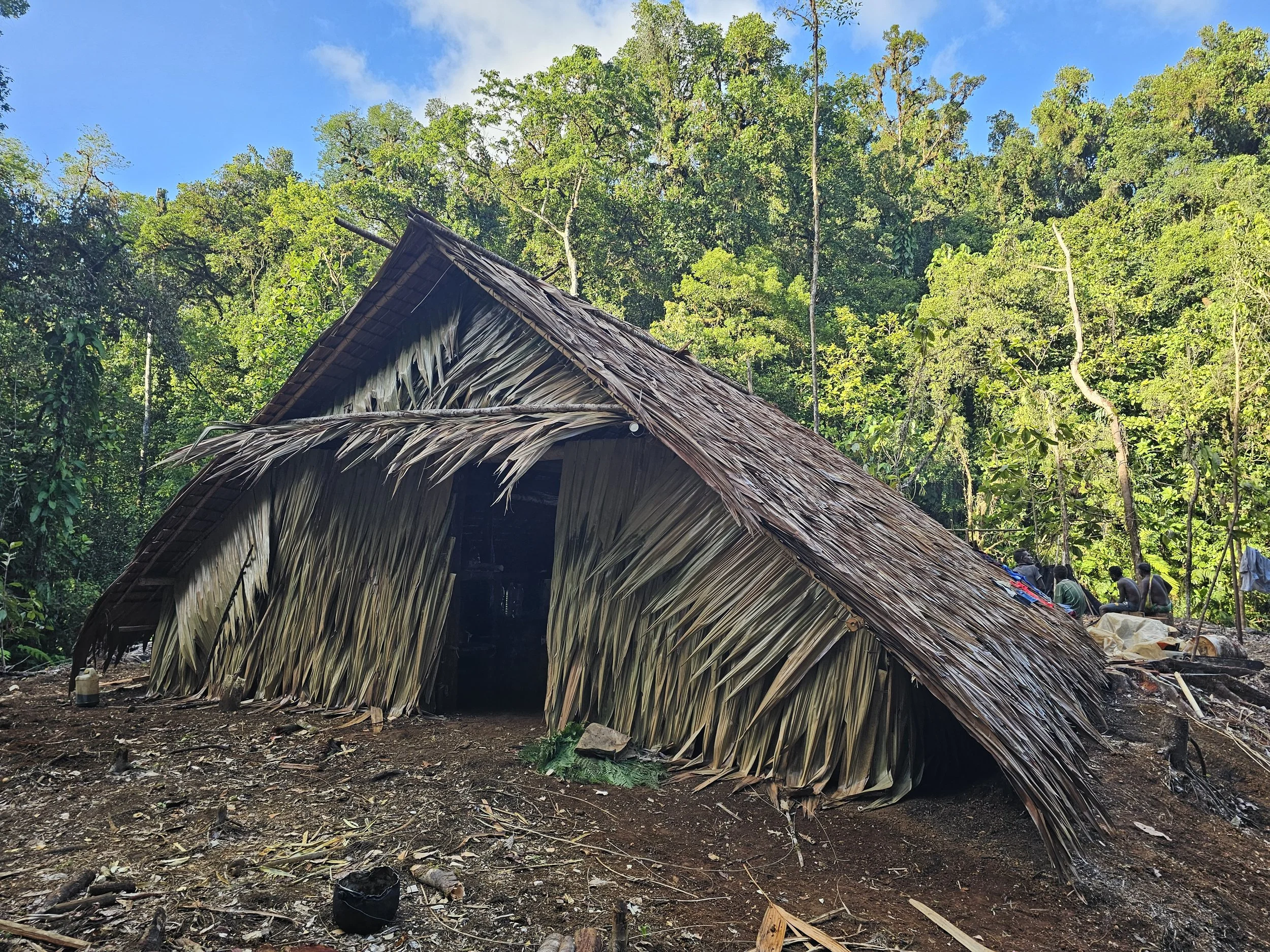
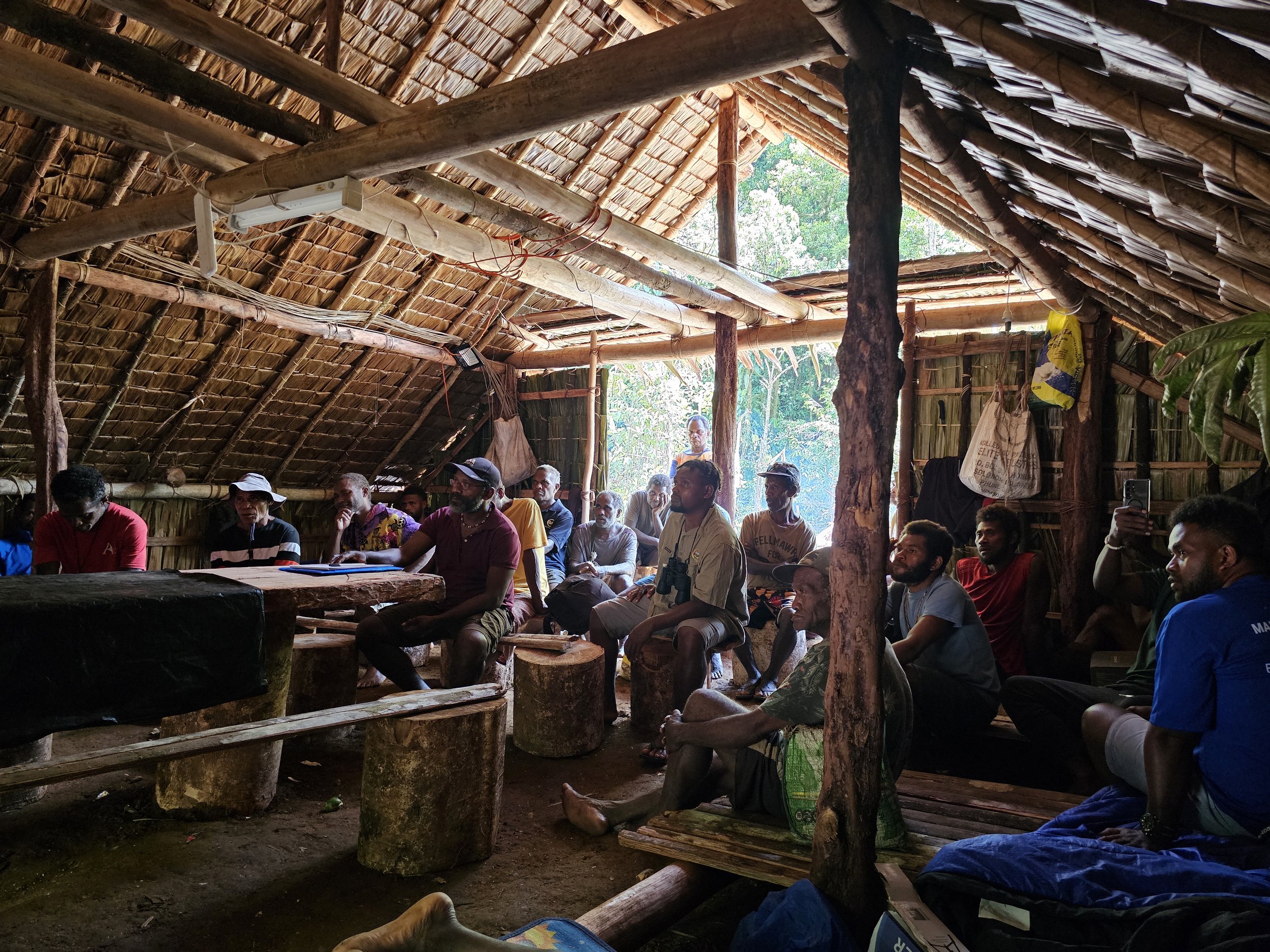
The newly established Aarahau Eco-Village.
Clarifying the Legal Meaning of the Management Plan
One of the most important discussions during the consultation centred on understanding the legal implications of the proposed Management Plan.
Several participants expressed concerns and uncertainty about the intention of introducing management rules. Some initially understood the Management Plan as a complete ban on accessing and using natural resources within the Protected Area, while others feared that it would take away their traditional rights as tribal landowners and resource users.
These concerns reflected the importance of ensuring that communities fully understand the purpose and legal framework of the Protected Area before new management arrangements are introduced.
In response, Mr Michael To’otalau explained that the proposed management rules and penalties are guided by the Protected Areas Act 2010 and the Protected Areas Regulations 2012. He emphasised the importance of understanding two key legal terms: “Prohibition” and “Restriction.”
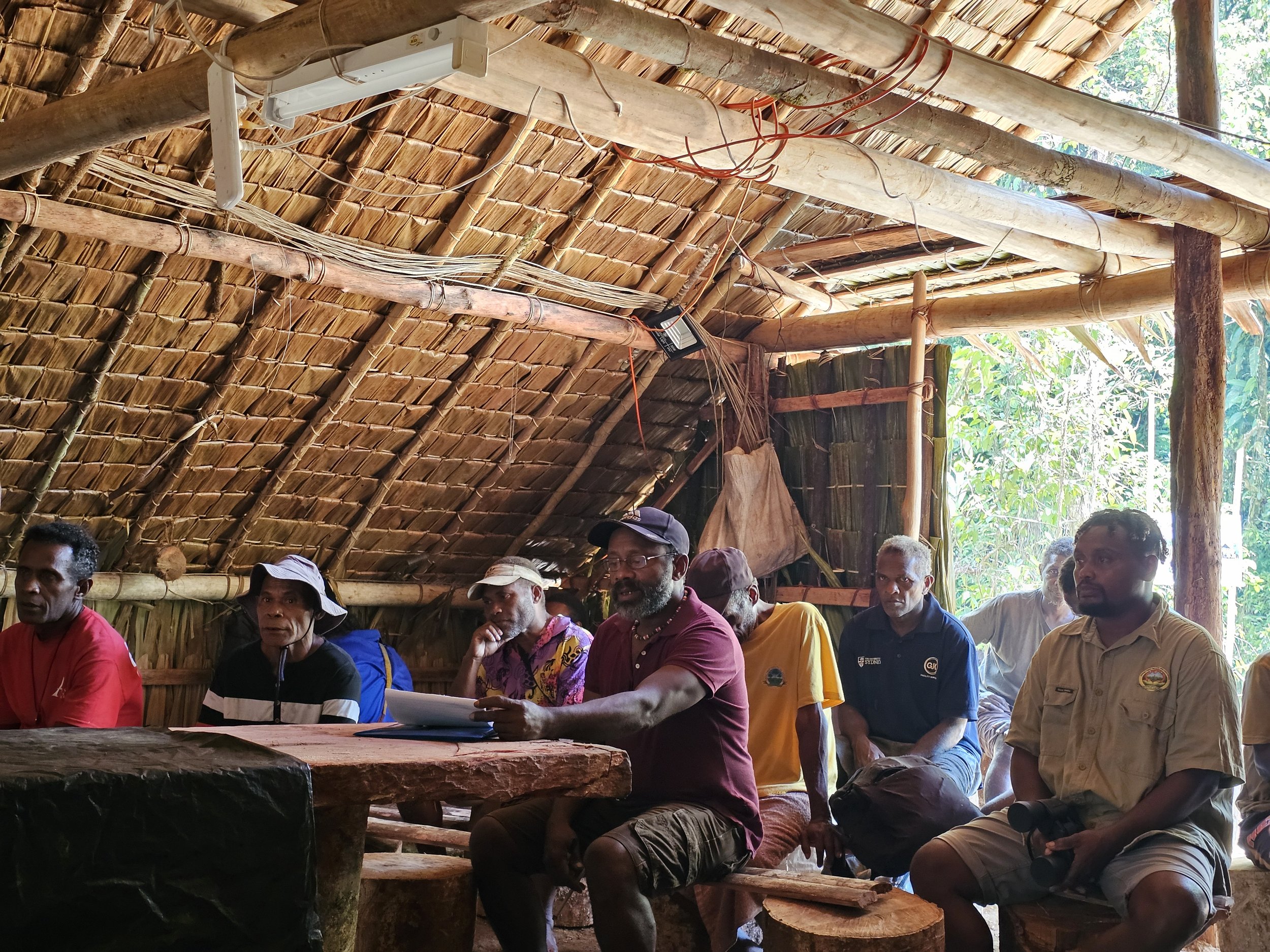
He explained that prohibited activities are those that are not permitted within the Protected Area. Activities such as logging and mining are examples of activities that the proposed management framework seeks to prohibit to safeguard the area's ecological integrity.
On the other hand, restricted activities are not necessarily completely banned. Rather, they may be undertaken subject to specified conditions, authorisation and approval by the relevant management authority, as provided for in the Management Plan and applicable law.
For example, certain fishing and diving activities within streams and waterways may be permitted under controlled conditions, subject to the relevant management committee's approval and any applicable restrictions.
This clarification helped address participants' concerns and improved their understanding that establishing a Protected Area does not automatically mean preventing communities from accessing all natural resources. Instead, it establishes a framework for regulating activities, preventing destructive practices and ensuring that resource use remains sustainable for present and future generations.
The discussion was particularly important in building community confidence and ensuring that tribal members understand both their responsibilities and the opportunities associated with the proposed Protected Area.
Bringing Traditional Knowledge and Modern Conservation Law Together
Beyond the legal discussions, the consultation created an important platform for dialogue between traditional knowledge and modern conservation approaches.
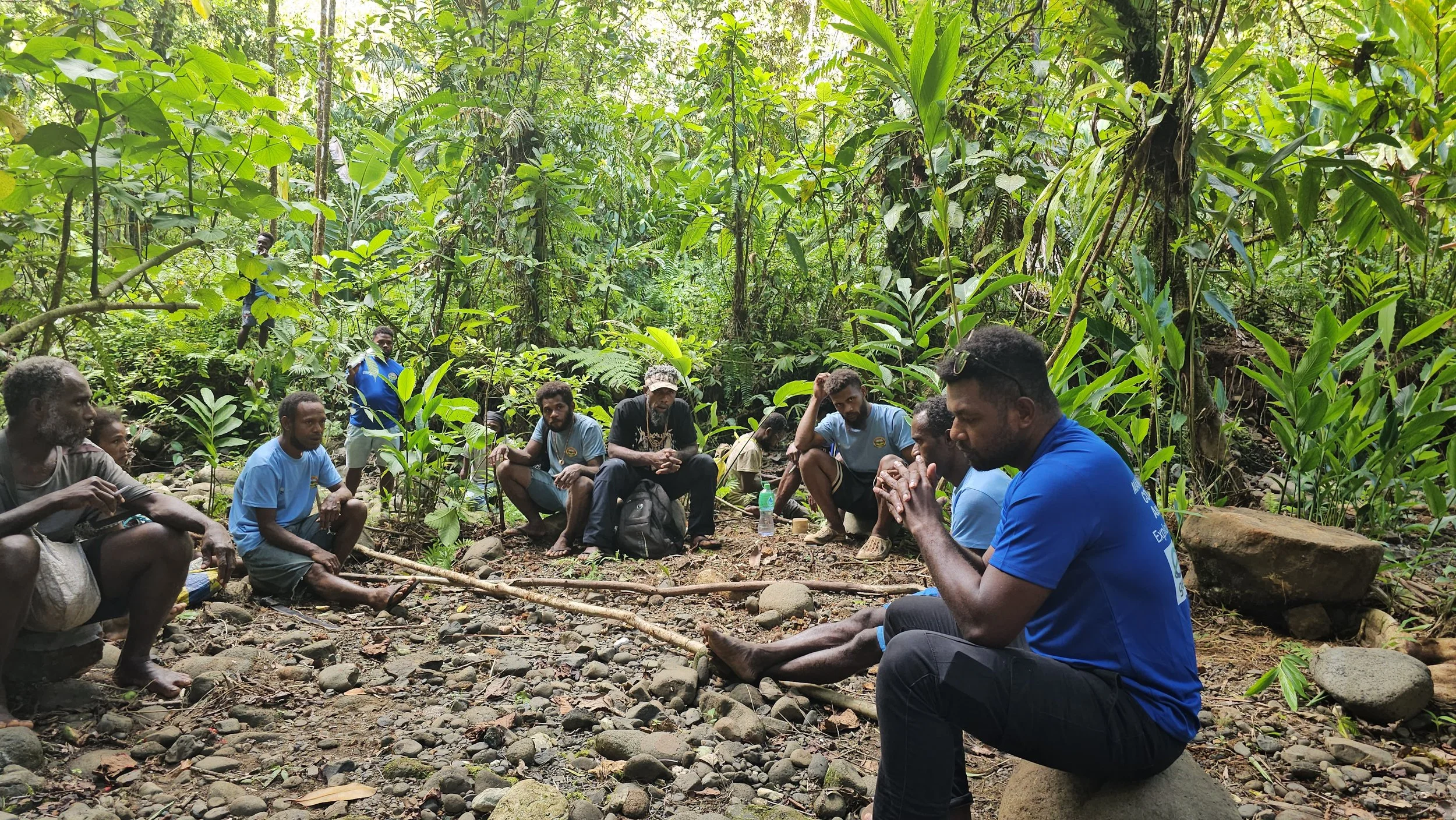
Participants engaged in lively discussions about the proposed management rules and compared them with traditional practices historically used by their ancestors to protect forests, rivers, wildlife and other natural resources.
For many participants, particularly young people, the discussions provided a valuable opportunity to learn from elders about traditional resource management systems and the customary responsibilities that governed the relationship between communities and their natural environment.
Elders shared perspectives on how their forefathers traditionally regulated access to natural resources, maintained respect for customary boundaries and upheld collective responsibilities to protect their ancestral lands.
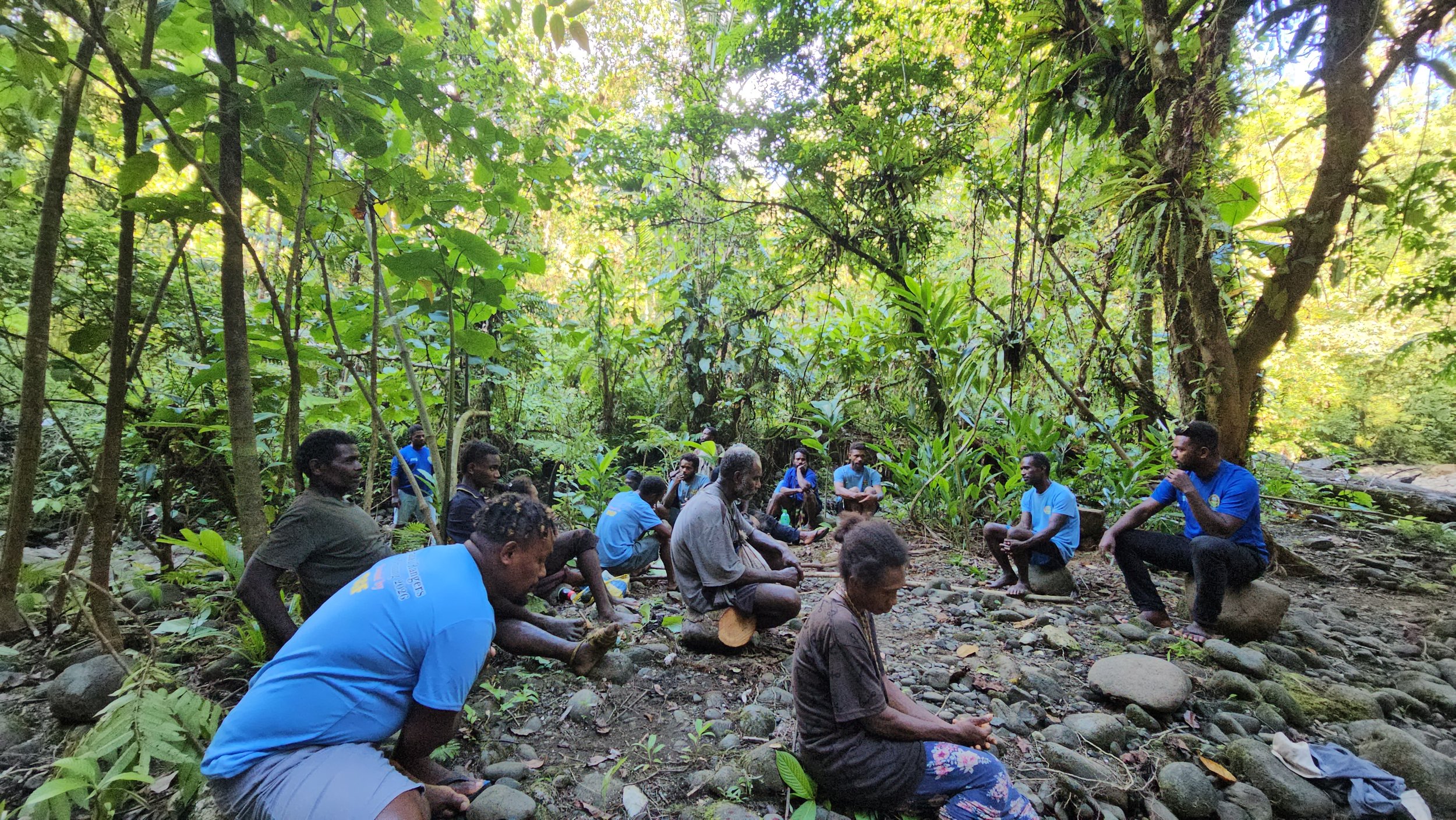
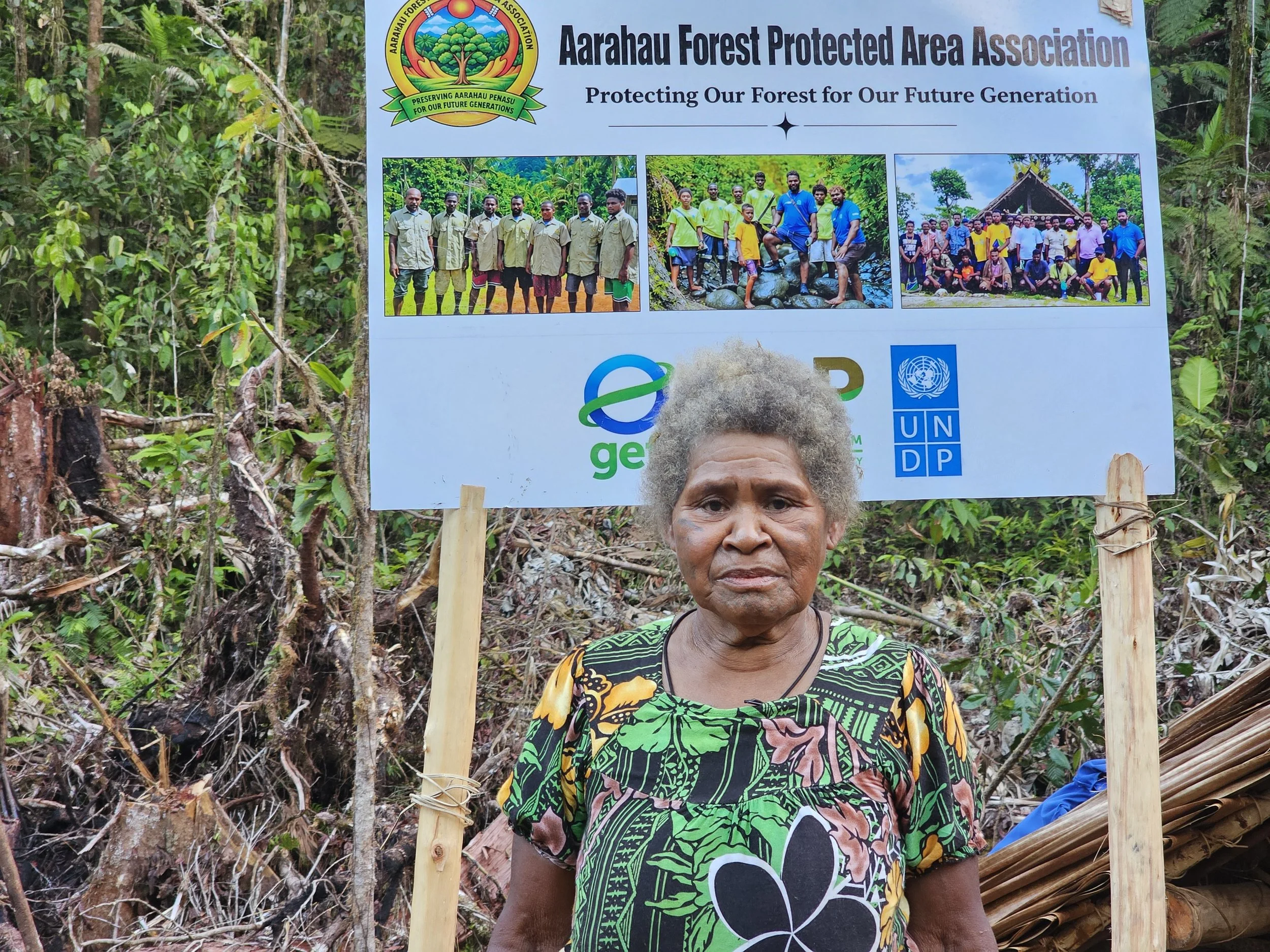
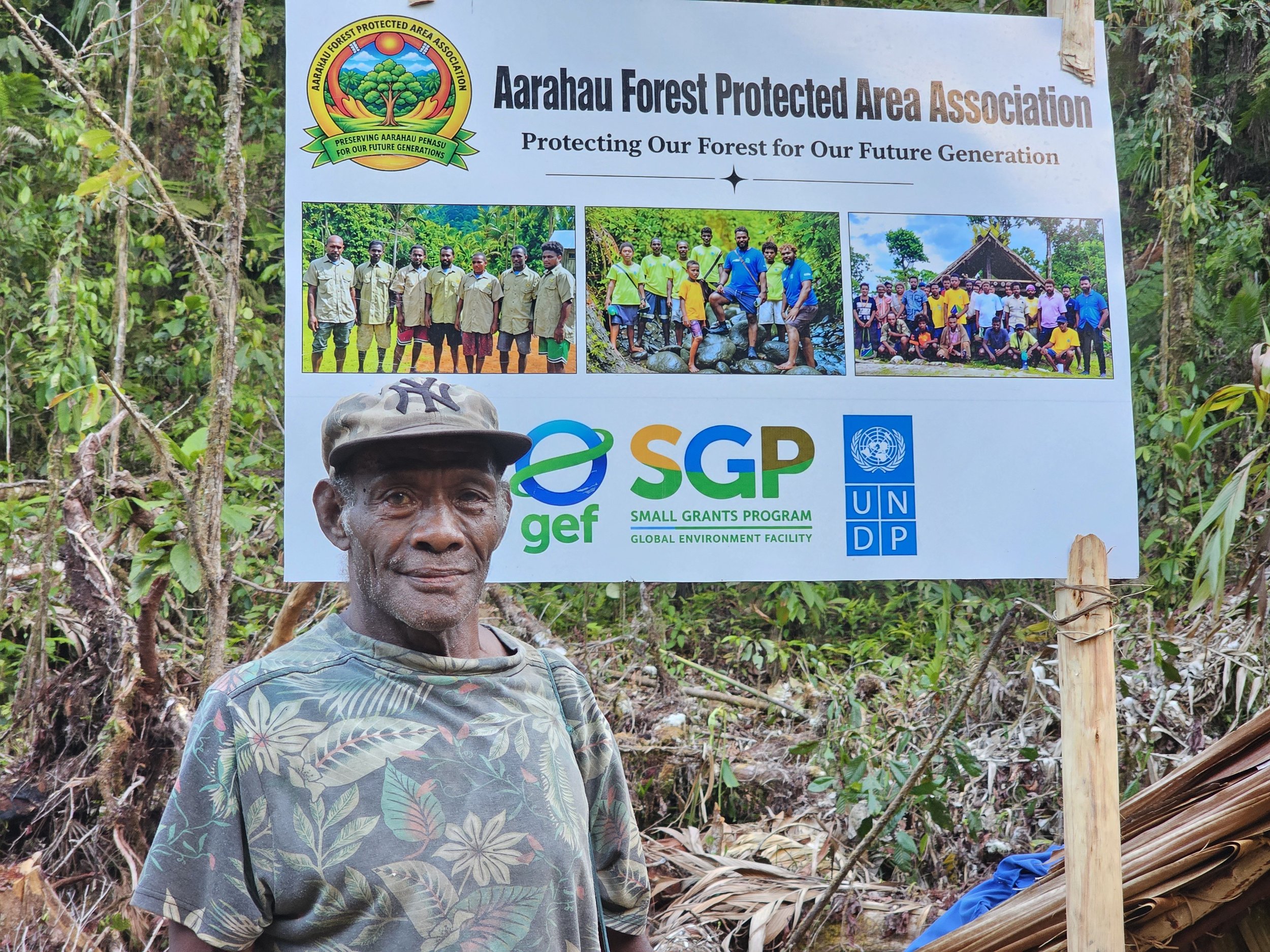
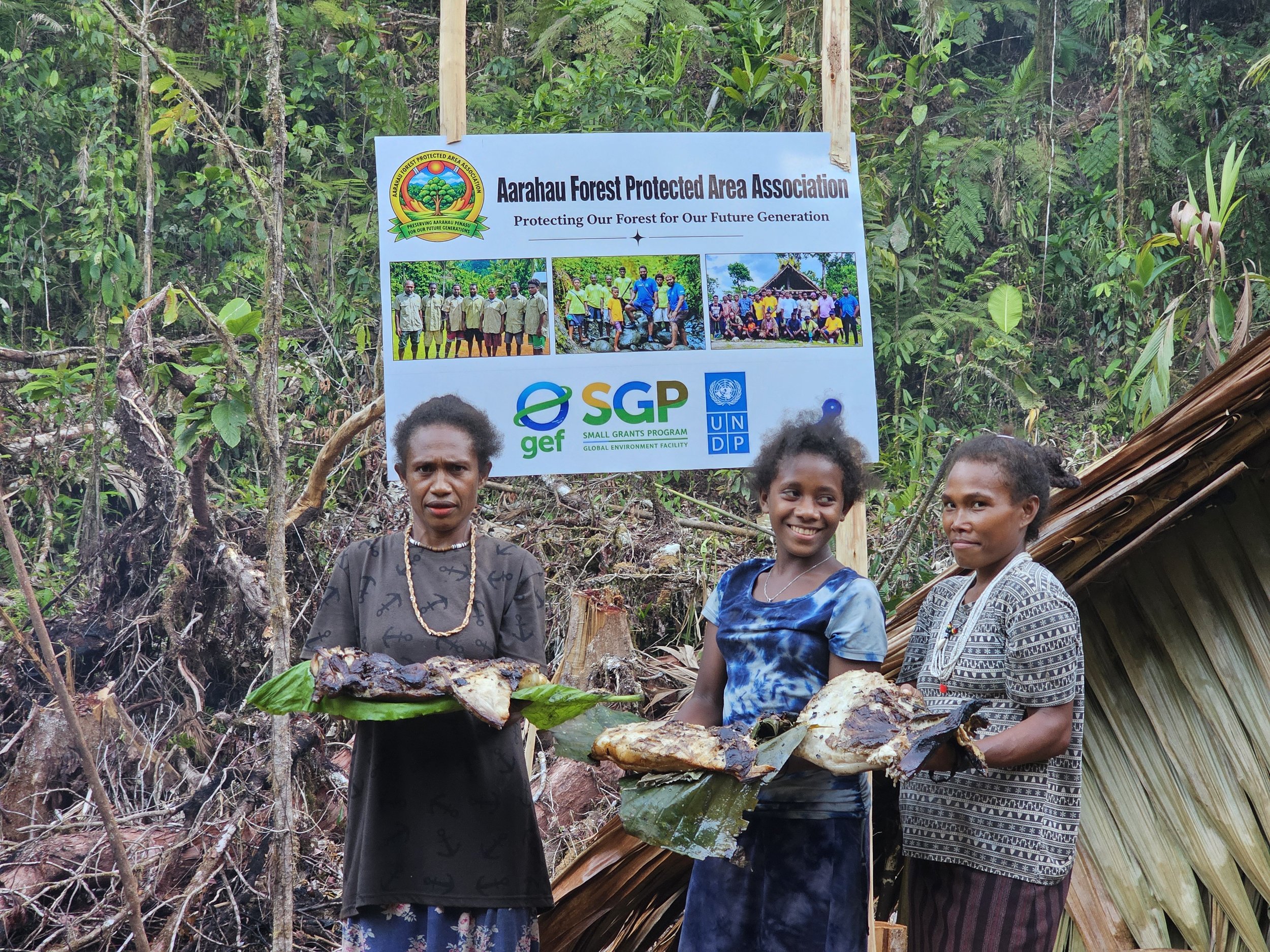
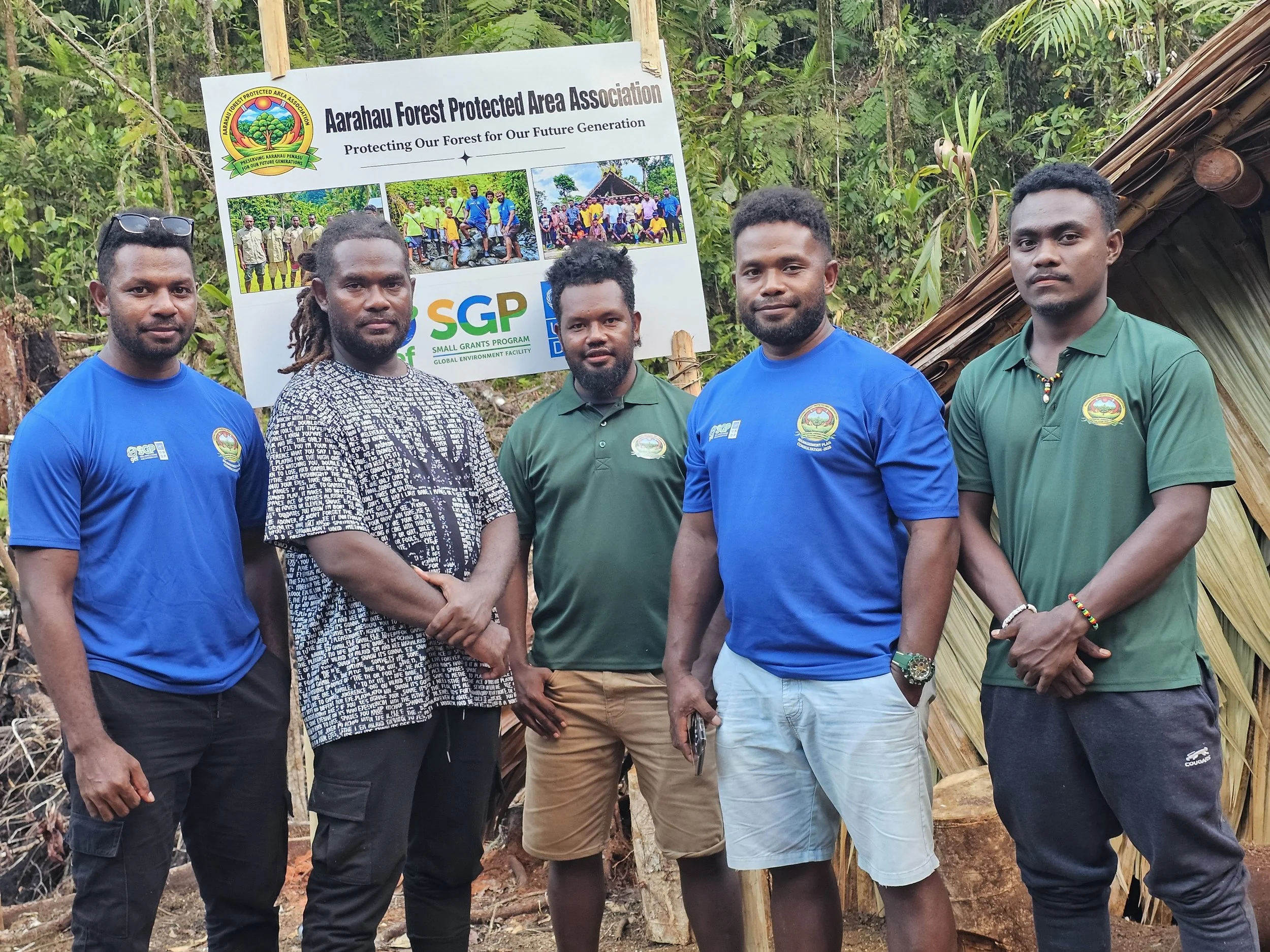
These discussions reinforced the understanding that conservation is not entirely new to Aarahau. Long before modern conservation laws and formal Protected Area arrangements existed, traditional systems and customary practices played an important role in safeguarding natural resources.
The consultation therefore highlighted the importance of integrating customary knowledge and traditional resource management practices into the modern Management Plan.
Participants recognised that the Management Plan should not simply introduce external rules but should also reflect the cultural values, customary responsibilities and traditional conservation practices of the Aarahau tribes.
By bringing traditional knowledge and modern legal frameworks together, AFPAA aims to establish a locally supported management system that respects customary ownership while providing a stronger legal foundation for protecting the area's natural heritage.
Importantly, participants also gained a better understanding that the Management Plan will provide an enforceable framework for addressing breaches of established rules, subject to the applicable legal procedures and authority.
Community Participation at the Heart of Conservation
The successful completion of the consultation demonstrates AFPAA's commitment to placing communities and customary resource owners at the centre of the Protected Area establishment process.
The involvement of chiefs, tribal representatives, women, youth, church leaders and local community members is particularly important because the long-term success of the Protected Area will depend on the understanding, cooperation and collective commitment of the people who have customary connections to the land.
Rather than imposing management rules without consultation, AFPAA recognises that meaningful community participation is essential to developing a Management Plan that is practical, culturally appropriate and widely supported.
The consultation also reinforced the importance of ensuring that conservation initiatives recognise the livelihood needs of local communities while protecting the ecological values of the forest.
Through this approach, AFPAA hopes to build a shared vision in which protecting the forest and sustaining community livelihoods are complementary objectives rather than competing interests.
Acknowledgement and Appreciation
The Aarahau Forest Protected Area Association sincerely acknowledges the United Nations Development Programme (UNDP) Solomon Islands, through the Global Environment Facility Small Grants Programme (GEF SGP), for providing financial support that has made this important consultation possible.
Speaking during the consultation, AFPAA Co-Chairman, Mr Robert Pasihiru, expressed his appreciation to UNDP for supporting the Association's ongoing efforts to establish the Aarahau Forest Protected Area.
Mr Pasihiru acknowledged the challenges the community-based organisation has faced over the years in progressing through the Protected Area establishment process, particularly due to its technical requirements and limited financial resources.
He stated:
"Aarahau is a community-based organisation, and we have struggled with the Protected Area process for years due to its technicality and limited financial support. However, we are progressing towards the remaining stages of the Protected Area process because of the support from UNDP. As the Co-Chairman, I thank UNDP for this support."
The Association also acknowledged the contributions of community representatives who participated in the consultation and openly shared their concerns, traditional knowledge and recommendations.
Among them was Ms Agness Takaia, a women's leader from Taripiri and a member of the Aarahau tribe, who expressed her appreciation for the opportunity to bring community members together to discuss the proposed laws for protecting their ancestral land.
She shared her appreciation in Are’Are:
"Inau Agness Takaia, inau te keni rao Aarahau ra’o, na to’o mako rao Arahau, raeku ka mano hana rikimani ta’a kou roko hana nahasua wara oto oto suana maku koru."
Her message reflected the importance of collective participation and community unity in protecting the land and natural resources inherited from previous generations.
Looking Ahead: Towards the Establishment of the Aarahau Forest Protected Area
The completion of the Management Plan consultation represents another significant step forward in AFPAA's efforts to establish the Aarahau Forest Protected Area under the Protected Areas Act 2010 and the Protected Areas Regulations 2012.
The feedback, concerns and recommendations gathered during the consultation will inform the continued drafting and refinement of the Management Plan, ensuring that community perspectives and customary practices are considered.
AFPAA is working towards launching its Protected Area application in 2027, marking an important milestone in the community's long-standing commitment to securing formal protection for its ancestral forest.
For the people of Aarahau, the journey towards establishing a Protected Area is about more than protecting trees, rivers and wildlife. It is about safeguarding their ancestral heritage, preserving their cultural identity, protecting the natural resources that sustain their livelihoods and ensuring that future generations inherit a healthy and thriving environment.
The Aarahau community is taking an important step towards turning its traditional commitment to protecting the land into a stronger, community-led and legally supported conservation framework.
